Wednesday, December 27, 2006

Rambling on Christmas 1 The Holy Family

Luke 2:41-52
Now every year his parents went to Jerusalem for the festival of the Passover. 42 And when he was twelve years old, they went up as usual for the festival. 43 When the festival was ended and they started to return, the boy Jesus stayed behind in Jerusalem, but his parents did not know it. 44 Assuming that he was in the group of travelers, they went a day’s journey. Then they started to look for him among their relatives and friends. 45 When they did not find him, they returned to Jerusalem to search for him. 46 After three days they found him in the temple, sitting among the teachers, listening to them and asking them questions. 47 And all who heard him were amazed at his understanding and his answers. 48 When his parents saw him they were astonished; and his mother said to him, “Child, why have you treated us like this? Look, your father and I have been searching for you in great anxiety.” 49 He said to them, “Why were you searching for me? Did you not know that I must be in my Father’s house?” 50 But they did not understand what he said to them. 51 Then he went down with them and came to Nazareth, and was obedient to them. His mother treasured all these things in her heart. 52 And Jesus increased in wisdom and in years, and in divine and human favor.
Merry Christmas!
Three years ago, when I preached on this text, I called it “Family Treatment.”
“Holy Family Sunday” bears an interesting text for us, doesn’t it?
It seems to me that this is often read as some sort of ideal family kind of moment, when in actuality, it is more a "Home Alone" sort of story that might well have the Social Service folks stopping by the house in the next week, "just to check on things."
Mary's line "Why have you treated us like this?" speaks volumes. As William Loader notes, the excuse that Jesus is "about his father’s business" would not wash with most parents of an almost-teenager. I have suggested that Luke's note that Jesus was "obedient to them" might go without saying, since Jesus was probably grounded to the kitchen for the next three months.
I suspect that this passage offers us opportunities to speak about family in ways that we rarely do anywhere in our culture. We can talk a bit about how families are not without their tensions and their times of losing one another. If there had been no family tensions, no tension between son and mother, would we really be able to say that Jesus had fully entered our humanity?
Further, we might take note that Jesus was one whose parents brought him to the Temple. They shaped his faith and therefore our faith.
There might well be plenty there for a whole sermon series, without waxing poetic about “the ideal family” or any of that sort of baloney.

Monday, December 18, 2006

Rambling on the Wonder

As we look ahead to Christmas Eve, we make a brief stop for 4 Advent and listen in on Mary.
“My soul magnifies the Lord, and my spirit rejoices in God my Savior, for he has looked with favor on the lowliness of his servant."
Luther, in his work on the Magnificat, LW 21, suggests that God’s high regard toward Mary, is rooted in nothing in herself, but, rather, in God’s grace alone. If anything of Mary is to be praised, it is her lowliness, a lowliness perhaps shared by us all in our seeming insignificance.
As Luther states it; “. . . not her humility but God’s regard is to be praised.” p. 314

As we prepare to proclaim the Gospel on this coming Sunday, will it be the magnificence of the Godhead entering our world, or the wonder of God’s condecension that will mostly truly conveigh the Good News of the incarnation, the true wonder of the Gospel?

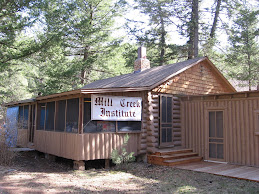
I deeply appreciate the emphasis of a renowned Mill Creek theologian and practitioner of Celebratory Pietism who - when speaking of Christmas preaching - points primarily to the Kenosis named in Philippians 2:
Let the same mind be in you that was in Christ Jesus, who, though he was in the form of God, did not regard equality with God as something to be exploited, but emptied himself, taking the form of a slave, being born in human likeness. And being found in human form, he humbled himself and became obedient to the point of death - even death on a cross.
As we venture forth in our preparations for Christmas proclamation, I wonder at this. That no matter how much stuff gets tacked on to Christmas, in the end, what shines through, is the utter humility of God entering our world in this way.
Peace to you this Christmas!

Thursday, December 14, 2006

Do Less Harm

Gadzooks. Fear, paranoia run rampant. Where are the little red books? I've heard they are late. But this late? Am I the only one without one? Will the world end soon? Will time as we know it come to a halt? What kind of destabilizing conspiracy is this? arggggg.

Monday, December 11, 2006

Monday, December 11, 2006 Advent 3 C - - Ramblings on Luke 3: 7 - 18

7 John said to the crowds that came out to be baptized by him, "You brood of vipers! Who warned you to flee from the wrath to come? 8Bear fruits worthy of repentance. Do not begin to say to yourselves, 'We have Abraham as our ancestor'; for I tell you, God is able from these stones to raise up children to Abraham. 9Even now the ax is lying at the root of the trees; every tree therefore that does not bear good fruit is cut down and thrown into the fire." 10And the crowds asked him, "What then should we do?" 11In reply he said to them, "Whoever has two coats must share with anyone who has none; and whoever has food must do likewise." 12Even tax collectors came to be baptized, and they asked him, "Teacher, what should we do?" 13He said to them, "Collect no more than the amount prescribed for you." 14Soldiers also asked him, "And we, what should we do?" He said to them, "Do not extort money from anyone by threats or false accusation, and be satisfied with your wages." 15 As the people were filled with expectation, and all were questioning in their hearts concerning John, whether he might be the Messiah, 16 John answered all of them by saying, "I baptize you with water; but one who is more powerful than I is coming; I am not worthy to untie the thong of his sandals. He will baptize you with the Holy Spirit and fire. 17His winnowing fork is in his hand, to clear his threshing floor and to gather the wheat into his granary; but the chaff he will burn with unquenchable fire." 18So, with many other exhortations, he proclaimed the good news to the people.

As we get closer to Christmas we tend to get more calls at the church from the needy asking for help. The welfare checks just do not seem to include enough money for the Christmas presents for the kids in the household. Luke's message clearly was one that has emphasis on including the poor and the marginalized. John the Baptist addresses groups of people (ie. crowds, soldiers, tax collectors, people, etc.) who ask, "What shall we do ?" He says, specific to their positions of influence & power, "bear good fruit !" Repentance means a new attitude and actions. So, is this passage only good news for the needy - - poor ? Can some of us pat ourselves on the back for being a bit more generous this time of year ? Episcopalian priest & writer, Tom Ehrich (On a Journey) writes: "John was proof that our call isn't to tell people what they want to hear, but to draw them closer to what God wants them to see."

Monday, December 04, 2006

Advent 2-- Ramblings on Luke 3: 1-6

1) In the fifteenth year of the reign of Emperor Tiberius, when Pontius Pilate was governor of Judea, and Herod was ruler of Galilee, and his brother Philip ruler of the region of Ituraea and Trachonitis, and Lysanias ruler of Abilene, 2) during the high priesthood of Annas and Caiaphas, the word of God came to John son of Zechariah in the wilderness. 3) He went into all the region around the Jordan, proclaiming a baptism of repentance for the forgiveness of sins, 4) as it is written in the book of the words of the prophet Isaiah, "The voice of one crying out in the wilderness: 'Prepare the way of the Lord, make his paths straight. 5) Every valley shall be filled, and every mountain and hill shall be made low, and the crooked shall be made straight, and the rough ways made smooth; 6) and all flesh shall see the salvation of God.' "

Advent in my church is like. . . a mass exodus to the nearby big city so everyone can shop rather than worship.

This Sunday's gospel text is about John the Baptist. His function in Jesus' story is to "prepare the way of the Lord." He does this by challenging people to repent, receiving his baptism as a sign of this repentance. The forgiveness of their sins is dependent on this repentance.
Luke links John's work to Isaiah 40:3-5 which states that preparation of the Lord will happen like a highway is built. The preparer will raise, lower, smooth, and straighten so that the Lord's way will be straight and easy.

I struggle with the purpose of John the Baptist in the gospel. At times I think he's more of a crazy cousin who worms his way into the story than he is helpful to it. What is accomplished through him? How does he function in the story? What is the purpose of this character? Does the Lord need somebody to prepare his way? If all the sinners are going to get fixed before Jesus shows up, then why does Jesus need to show up?

I suppose one could take advantage of the preparation theme of this text. It does fit nicely with Advent. And one could hit hard on the theme of repentance. But is John the Baptist necessary for those themes?

Those are my suspicions. I want to focus on repentance (turning away from sin). It is helpful to link it with baptism. Luther wrote in the Small Catechism: Baptism signifies that daily the old person in us with all our sins and evil desires is to be drowned through sorrow for sin and repentance, and that daily a new person is to come forth and rise up to live before God in righteousness and purity forever. I am intrigued by how closely linked baptism and repentance are and by how much they need each other. We give baptism priority since it is a sacrament; but where would baptism be without repentance? Repentance plays a huge role in shaping the baptized's day-to-day lives. Repentance is the big correcting work of the Spirit which helps to make us different from the world. It helps to give light to our souls so that they do shine before others. It helps the bearing of fruit. It allows us to love God and neighbor rather than just the self. In this way repentance is a gift and offers us hope that we won't always be such assholes.
Baptism without repentance is like those instances where some of our baptismal practices are a bit liberal. Have you ever had people in your churches ask you to baptism one of their relatives kids? They live in far off states and travel thousands of miles to have their kids baptized in our churches where neighbors won't see them. When they return home, who knows what life is lived. (Not that I've ever performed such a baptism. . . but. . .). I'd quote Bonhoeffer here by I loaned my Cost of Discipleship out; maybe one of you could.

If I preach on this I will need to get into an explanation of baptism for daily living as opposed to the typical discussion of baptism being adoption into God's family. Ramble away please. . .